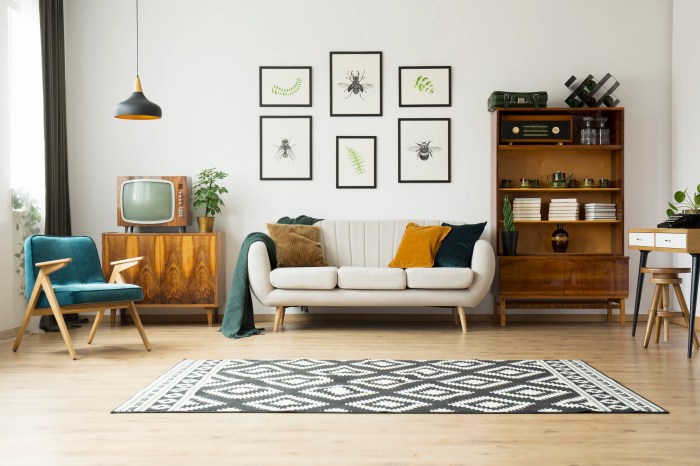
Transforming your living room from drab to fab is easier than you think! This guide delves into the art of living room design, covering everything from selecting the perfect style to adding those finishing touches that make a house a home. We’ll explore diverse design aesthetics, practical furniture arrangements, and the psychology of color, all while providing actionable steps to create a space that reflects your personality and enhances your well-being.
Whether you’re a seasoned design enthusiast or a complete novice, this comprehensive guide will empower you to confidently navigate the world of interior design and create a living room you’ll love spending time in. From understanding the principles of balance and flow to mastering the art of layering textures and patterns, we’ll equip you with the knowledge and inspiration to create a space that is both beautiful and functional.
Defining Your Living Room Style
Choosing a style for your living room sets the foundation for a cohesive and aesthetically pleasing space. The style you select will influence your furniture choices, color palette, and decorative elements, ultimately shaping the overall mood and atmosphere of the room. Consider your personal preferences, lifestyle, and the existing architectural features of your home when making this important decision.
Modern Living Room Style
Modern living rooms are characterized by clean lines, minimalist aesthetics, and a focus on functionality. They often incorporate sleek furniture with simple shapes and neutral color palettes. The emphasis is on creating a space that feels open, uncluttered, and sophisticated.
Furniture typically includes low-profile sofas and armchairs with a streamlined design, often upholstered in leather or neutral-toned fabrics. Coffee tables are usually simple and geometric, perhaps made of glass or metal. Storage solutions are integrated seamlessly into the design, minimizing visual clutter.
Color palettes generally feature a neutral base, such as white, gray, or beige, accented with pops of bolder colors like deep blues, greens, or blacks. Metallic accents, such as chrome or brushed nickel, are common.
A mood board for a modern living room might include a photograph of a sleek, gray sofa, a sample of a textured, off-white wall paint, a picture of a geometric glass coffee table, and images of simple, abstract artwork in muted tones. The overall emotional impact is one of calm, sophistication, and effortless style. The clean lines and neutral colors create a sense of spaciousness and tranquility.
Traditional Living Room Style
Traditional living rooms evoke a sense of warmth, comfort, and timeless elegance. They feature classic furniture pieces, rich fabrics, and ornate details. The overall atmosphere is one of inviting coziness and established sophistication.
Furniture often includes plush sofas and armchairs upholstered in luxurious fabrics like velvet or brocade. Ornate details, such as carved wood legs and tufted upholstery, are common. Traditional coffee tables are often made of wood with intricate designs. The use of antiques or antique-inspired pieces is prevalent.
Color palettes typically include warm, earthy tones such as beige, brown, cream, and deep reds. Accent colors might include gold, burgundy, or forest green. Rich textures, such as velvet, silk, and wool, add to the overall luxurious feel.
A mood board for a traditional living room might include images of a richly upholstered velvet sofa, a detailed close-up of an antique wooden table, samples of damask fabric, and pictures of ornate mirrors or framed artwork with classical themes. The emotional impact is one of comfort, warmth, and timeless elegance. The rich colors and textures create a sense of opulence and history.
Eclectic Living Room Style
Eclectic living rooms are characterized by a playful mix of styles, colors, and textures. They embrace individuality and creativity, blending different eras and design aesthetics to create a unique and personalized space. The overall effect is one of vibrant energy and artistic expression.
Furniture might include a combination of vintage finds, modern pieces, and handmade items. There’s no strict adherence to a particular style; the key is to create a cohesive look through a thoughtful selection of items that complement each other. Unexpected pairings and bold choices are encouraged.
Color palettes are often vibrant and diverse, with no limitations on color combinations. Mixing patterns and textures is also a key element of this style. The overall effect is a visually stimulating and energetic atmosphere.
A mood board for an eclectic living room might include a photograph of a brightly colored vintage armchair, a sample of a patterned rug with bold geometric designs, images of diverse artwork representing different styles, and pictures of unique decorative items such as handcrafted pottery or antique lamps. The emotional impact is one of creativity, individuality, and vibrancy. The diverse elements create a stimulating and personalized atmosphere that reflects the homeowner’s unique personality.
Furniture Arrangement and Layout
The placement of your furniture significantly impacts the overall feel and functionality of your living room. Careful consideration of traffic flow and the creation of distinct zones will transform your space from cluttered to comfortable and inviting. A well-planned layout maximizes space and enhances the aesthetic appeal of your chosen décor.Furniture placement directly affects how easily people move through the room and how they interact with the space.
A poorly planned layout can create bottlenecks and awkward pathways, hindering both comfort and functionality. Conversely, a well-thought-out arrangement ensures a smooth flow of movement, making the room feel more spacious and welcoming. Focal points, such as a fireplace or a large window with a view, should be emphasized through furniture placement, drawing the eye and creating a sense of balance.
Furniture Arrangement Strategies for Maximizing Space
Effective furniture arrangement is key to maximizing space, particularly in smaller living rooms. Strategies such as using multi-functional furniture (e.g., ottomans with storage), choosing furniture with slim profiles, and employing strategic placement to create visual depth can significantly improve the perception of space. In larger rooms, zoning is crucial for creating distinct areas for conversation, relaxation, and entertainment.
Creating Conversation Areas
Conversation areas are designed to encourage interaction and social engagement. The arrangement of seating is paramount in this process. Consider arranging seating in a conversational grouping, ensuring that people can easily see and talk to one another without straining their necks or having to shout. The use of a coffee table in the center of the grouping provides a convenient surface for drinks and snacks, further enhancing the social aspect.
Avoid arranging furniture in a way that isolates people or creates barriers to conversation.
Optimal Furniture Placement Diagrams
The following diagrams illustrate optimal furniture placement in small and large living rooms. Remember, these are suggestions; adapt them to your specific room dimensions and personal preferences.
| Small Living Room | Large Living Room | ||
|---|---|---|---|
|
Imagine a small square room. A sofa is placed against one wall, angled slightly towards the center. A small armchair sits opposite the sofa, creating a cozy conversation area. A coffee table is positioned between them. A slim console table is placed against the remaining wall, providing extra surface area. |
Visualize this: A small, square room with a sofa positioned along one wall, angled slightly towards the room’s center. Opposite the sofa, a single armchair sits, completing a conversational grouping. A compact coffee table fits neatly between the sofa and the armchair. A narrow console table is positioned against the remaining wall, adding surface space without overwhelming the room. |
Envision a spacious rectangular room. A large sectional sofa anchors one end, creating a primary seating area. Facing the sofa, two armchairs and a coffee table form a smaller conversation area. A media console with a TV sits against the opposite wall. A separate reading nook with a comfortable armchair and a floor lamp is tucked into a corner. |
Picture a large, rectangular living room. A substantial sectional sofa occupies one end, establishing a main seating zone. Opposite the sectional, a pair of armchairs and a sizable coffee table comprise a secondary conversation area. A media console with a television is positioned against the opposite wall. In a quiet corner, a comfortable armchair and a floor lamp create a designated reading nook. |
Color Palette and Wall Decor
Choosing the right color palette and wall décor is crucial for creating the desired atmosphere in your living room. Color significantly impacts mood and the overall feeling of a space, while wall décor adds personality and visual interest. Careful consideration of both aspects ensures a harmonious and inviting living area.Color psychology plays a vital role in interior design.
Different colors evoke different emotions and sensations. For instance, blues and greens are often associated with calmness and tranquility, making them ideal for relaxation spaces. Warmer tones like reds and oranges can stimulate energy and conversation, suitable for more social areas. Neutrals such as grays, beiges, and whites provide a versatile backdrop, allowing other elements to stand out.
Understanding these effects allows you to curate a space that reflects your desired ambiance.
Color Palette Selection for a Cohesive Living Room
Creating a cohesive color palette involves selecting a range of colors that work well together across walls, furniture, and accessories. A good starting point is to choose a dominant color for your walls, then select accent colors for furniture and decorative items. This dominant color could be a neutral, allowing for greater flexibility with accent colors, or a bolder hue that sets the overall tone.
For example, a soft gray wall could be complemented by navy blue furniture and pops of coral in throw pillows and artwork. Maintaining a consistent color temperature (warm or cool) throughout the space enhances harmony. Consider using a color wheel to identify complementary, analogous, or triadic color schemes. Using a limited color palette prevents the room from feeling cluttered or overwhelming.
Wall Décor Schemes
The following Artikels three distinct wall décor schemes, demonstrating diverse approaches to incorporating artwork, mirrors, and shelving. Each scheme offers a unique aesthetic and demonstrates how these elements can contribute to the overall design.
Scheme 1: Gallery Wall with a Modern Aesthetic
This scheme focuses on creating a dynamic and visually engaging gallery wall. The arrangement is carefully planned to showcase a collection of artwork, possibly framed prints, photographs, or even a mix of both. Different sizes and frames add visual interest. A large mirror is strategically placed to reflect light and expand the sense of space.
- Materials: A variety of framed artwork (varying sizes and styles), a large rectangular mirror with a simple frame, possibly a small floating shelf for smaller items.
- Techniques: Arrange the artwork in a balanced yet slightly asymmetrical pattern. Ensure adequate spacing between frames. Use a level to ensure straight hanging. The mirror should be positioned to reflect natural light or a focal point in the room.
Scheme 2: Rustic Charm with Open Shelving
This scheme emphasizes a rustic and warm aesthetic. Open shelving is a key element, showcasing decorative objects, books, and plants. Artwork is kept to a minimum, focusing on one or two larger pieces that complement the rustic style. A smaller, ornate mirror adds a touch of elegance.
- Materials: Wooden open shelving unit, one or two large pieces of rustic artwork (possibly landscapes or still lifes), a smaller, ornate mirror with a distressed or antiqued finish, decorative objects (e.g., pottery, vintage books).
- Techniques: Arrange items on the shelves in a visually appealing way, avoiding overcrowding. Use varying heights and textures to create visual interest. The artwork should be positioned to complement the shelving unit. The mirror can be placed above the shelving unit or on a side wall.
Scheme 3: Minimalist Elegance with a Single Statement Piece
This scheme prioritizes simplicity and clean lines. The focus is on a single, large statement piece of artwork that acts as the focal point of the wall. A large, modern mirror is incorporated to complement the artwork and reflect light. Minimalist shelving, if included, would be unobtrusive and functional.
- Materials: One large-scale piece of modern artwork (e.g., abstract painting or sculpture), a large, minimalist mirror (possibly framed in a simple metal or wood frame), a small, floating shelf (optional).
- Techniques: The artwork should be the undeniable focal point of the wall, with the mirror positioned to either complement or contrast the artwork’s style. The shelf, if used, should be kept sparsely decorated.
Lighting and Ambiance
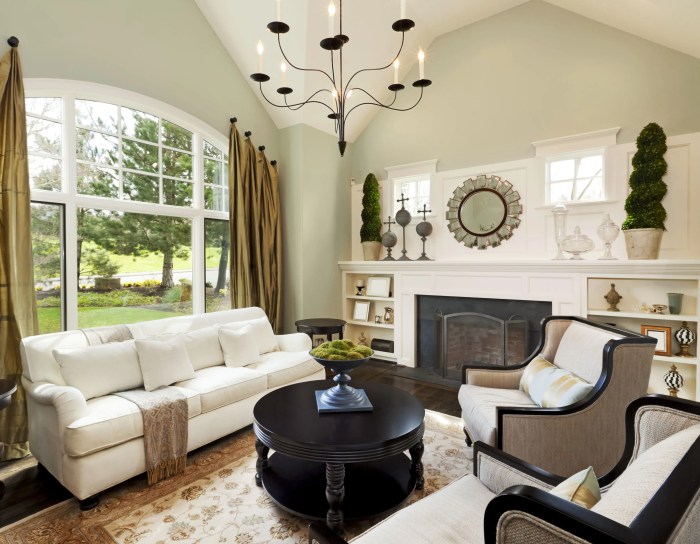
Creating the perfect ambiance in your living room is crucial for comfort and functionality. Lighting plays a pivotal role in achieving this, moving beyond simple illumination to shape the mood and highlight key features of the space. A well-designed lighting plan considers not just brightness, but also the quality and distribution of light, creating layers that enhance the overall aesthetic and usability of the room.
Proper lighting enhances the mood, functionality, and visual appeal of a living room. Layered lighting, incorporating ambient, task, and accent lighting, is key to achieving a well-lit and inviting space. This approach ensures sufficient brightness for various activities while also creating visual interest and highlighting specific elements.
Layered Lighting Strategies
Effective living room lighting relies on a layered approach, combining different types of lighting to achieve a balanced and functional illumination scheme. Ambient lighting provides overall illumination, task lighting focuses light on specific areas for activities, and accent lighting highlights architectural details or artwork. This layered approach ensures flexibility and caters to diverse needs within the living room. For instance, a softly lit ambient light might be perfect for relaxation, while bright task lighting is needed for reading or working.
Accent lighting adds a touch of drama and sophistication.
Examples of Lighting Fixtures and Placement
A variety of lighting fixtures can contribute to a layered lighting scheme. Ambient lighting might include a central ceiling fixture, such as a chandelier or a flush-mount fixture, providing general illumination across the room. Task lighting can be achieved with strategically placed floor lamps beside seating areas for reading, or desk lamps for working. Accent lighting might involve track lighting highlighting artwork or recessed lighting emphasizing architectural features like a built-in bookcase.
Placement is key; for example, a floor lamp should be positioned to avoid casting shadows on reading material. Table lamps should be placed symmetrically on side tables flanking a sofa for balanced illumination.
A Sample Lighting Plan
This plan incorporates natural light, lamps, and overhead fixtures to create a balanced and versatile lighting scheme.
- Natural Light: Maximize natural light by keeping windows unobstructed. Sheer curtains allow diffused light while maintaining privacy. This serves as the primary ambient light source during the day.
- Ambient Lighting: A semi-flush mount ceiling fixture with a warm-toned light provides even illumination across the room during evenings. This fixture offers a soft, overall glow for relaxed ambiance.
- Task Lighting: Two adjustable floor lamps, placed beside the sofa, offer focused light for reading. These lamps feature flexible necks to direct light precisely where needed.
- Accent Lighting: Picture lights above artwork draw attention to specific pieces and add visual interest. These lights are low-wattage and positioned to avoid glare.
Adding Texture and Pattern
Introducing texture and pattern is crucial for creating a visually engaging and comfortable living room. The strategic use of textiles, rugs, and throw pillows can dramatically impact the overall aesthetic, adding depth, warmth, and personality to the space. Different textures and patterns evoke various moods and feelings, allowing for a high degree of customization and personal expression.
Textile Choices for Visual Interest and Texture
The selection of textiles significantly influences the room’s tactile and visual appeal. Rugs provide a foundational layer of texture, while throw pillows and blankets introduce smaller-scale textural elements. Natural fibers like wool, cotton, and linen offer a rustic charm and varied textures, from the coarse weave of a linen throw to the soft pile of a wool rug.
Synthetic materials, such as velvet or faux fur, can provide luxurious softness or a modern, sleek feel. Consider the interplay between different textures; for example, pairing a chunky knit throw with a smooth, silky cushion creates an interesting contrast. The weight and drape of fabrics also contribute to the overall impression; a heavy, richly textured tapestry will feel quite different from a lightweight cotton curtain.
The Impact of Patterns and Textures on Room Aesthetics
Patterns and textures work in tandem to shape the atmosphere of a living room. Bold geometric patterns can create a modern and energetic feel, while floral prints lend a touch of romance or traditional elegance. Subtle patterns, like stripes or small-scale florals, can add visual interest without overwhelming the space. Textural contrasts—a smooth velvet sofa against a roughly woven rug, for instance—can add dynamism and visual depth.
The scale of patterns is also important; large-scale patterns can make a room feel more dramatic, while smaller patterns create a more subtle and refined look. The color palette interacts significantly with patterns and textures, influencing the overall mood and tone. A room with predominantly muted colors and subtle textures will feel calm and serene, while a room with bright colors and bold patterns will feel more vibrant and exciting.
Three Textile Schemes
The following table illustrates three distinct textile schemes, each employing a unique combination of textures and patterns to achieve a different aesthetic.
| Scheme Name | Primary Texture | Pattern Examples | Overall Mood |
|---|---|---|---|
| Rustic Farmhouse | Natural fibers (linen, wool, cotton); chunky knits; woven textures | Plaid, gingham, stripes, subtle florals | Warm, inviting, comfortable |
| Modern Minimalist | Smooth, sleek fabrics (velvet, silk); clean lines; minimal embellishment | Geometric patterns (stripes, chevrons); solid colors; subtle textures | Sophisticated, clean, uncluttered |
| Bohemian Eclectic | Mix of textures (fringe, tassels, embroidery); layered fabrics | Bold prints (ethnic patterns, paisley, florals); diverse colors and textures | Vibrant, layered, expressive |
Balcony Decor
Extending your living room’s design to your balcony seamlessly creates a larger, more inviting space. By carefully selecting furniture, plants, and décor that complement your indoor aesthetic, you can transform your balcony into a stylish outdoor extension of your home. Consider the existing style of your living room as a foundation for your balcony design choices.
Extending the Living Room Aesthetic to the Balcony
To successfully extend your living room’s style to your balcony, start by identifying the key elements of your interior design. Is it minimalist, bohemian, modern, traditional, or something else? Once you’ve defined the overall style, choose balcony furniture, plants, and décor that reflect those same characteristics. For example, if your living room is minimalist, your balcony should avoid clutter and feature clean lines.
Conversely, a bohemian living room might inspire a balcony with vibrant colors, textured fabrics, and a collection of potted plants. Maintaining consistency in color palettes, materials, and overall aesthetic will create a harmonious flow between the two spaces.
Outdoor Furniture Selection
Choosing the right outdoor furniture is crucial for both comfort and style. Consider weather-resistant materials like wicker, aluminum, or teak for furniture that can withstand the elements. For seating, comfortable chairs or a small sofa are ideal, depending on the size of your balcony. A small bistro set can also be a charming addition, perfect for enjoying morning coffee or an evening drink.
If space allows, consider including a small outdoor coffee table for drinks and books. The furniture should be scaled appropriately for the balcony’s size; avoid overcrowding the space.
Plant Selection and Placement
Plants add life and vibrancy to any outdoor space. Select plants that thrive in your climate and can tolerate sun or shade, depending on your balcony’s exposure. Consider a mix of sizes and textures for visual interest. Large potted plants can create a sense of privacy and act as a natural screen, while smaller plants can add pops of color and texture.
Trailing plants, like ivy or petunias, can cascade over the balcony’s edge, creating a lush and inviting atmosphere. Remember to choose planters that complement your balcony’s overall style. For example, terracotta pots evoke a rustic feel, while sleek, modern planters suit a contemporary design.
Decorative Elements for Balcony Enhancement
The decorative elements you choose should enhance, not overwhelm, your balcony. Consider adding outdoor cushions and throws in colors and patterns that complement your living room’s décor. String lights can create a warm and inviting ambiance, especially in the evening. A small outdoor rug can define the space and add texture underfoot. Wind chimes or other subtle sound elements can enhance the sensory experience.
Artwork suitable for outdoor use, such as weather-resistant prints or sculptures, can also add a personal touch. Avoid overly delicate or fragile items that could be easily damaged by weather conditions.
Example Balcony Design Complementing a Modern Living Room
To illustrate, let’s consider a modern living room with a neutral color palette of grays and whites, accented with pops of teal. The following items would create a cohesive balcony design:
- Furniture: Two sleek aluminum chairs with gray cushions and a small, square glass-top coffee table.
- Plants: A large potted olive tree in a simple white ceramic pot, a few smaller succulents in teal-colored pots, and trailing ivy in a hanging planter.
- Decorative Elements: String lights, a small gray outdoor rug, and two teal-colored outdoor cushions.
Accent Pieces
Accent pieces are the unsung heroes of interior design, adding personality and visual interest to a living room. They are the finishing touches that elevate a space from merely functional to truly stylish and inviting. These smaller elements contribute significantly to the overall aesthetic, tying together the larger design elements and reflecting the homeowner’s unique style. Careful selection and placement of accent pieces can create a cohesive and visually appealing environment.
The Role of Accent Pieces in Enhancing Living Room Style
Accent pieces serve multiple purposes in enhancing a living room’s style. They add visual interest, breaking up large expanses of color or texture and preventing monotony. They can introduce pops of color or unexpected patterns, adding depth and complexity to the space. Furthermore, they can reflect personal tastes and hobbies, making the living room a true reflection of the inhabitants’ personality and style.
Strategically placed accent pieces can also help to define different zones within the living room, such as a reading nook or a conversation area.
Examples of Accent Pieces
Sculptures, vases, and decorative trays are just a few examples of the many types of accent pieces available. Sculptures, whether abstract or representational, can add a focal point and artistic flair. A well-chosen sculpture can become a conversation starter, adding a unique element to the room’s décor. Vases, filled with fresh flowers or dried arrangements, inject life and vibrancy into the space, adding both color and texture.
Their shapes and materials can complement or contrast with other elements in the room, adding visual interest. Decorative trays offer a practical and stylish way to organize and display smaller items, such as remotes, candles, or coasters, while adding a touch of elegance. Their materials, from wood to metal to ceramic, can contribute to the overall aesthetic.
Accent Pieces for Different Living Room Styles
The selection of accent pieces should always be carefully considered within the context of the overall living room style.
Choosing appropriate accent pieces is key to creating a cohesive and stylish living room. Below are suggestions for different design styles:
Modern Living Room:
- Sleek, minimalist sculptures in metallic finishes.
- Geometric vases in neutral colors.
- A low, rectangular tray in polished wood or stone.
Traditional Living Room:
- Ornate porcelain vases with floral patterns.
- A framed antique mirror.
- A decorative tray with intricate detailing.
Eclectic Living Room:
- A collection of vintage or antique items, such as small figurines or books.
- Vases with a variety of textures and patterns.
- A mismatched set of decorative trays in different materials and styles.
Cozy Decor
Creating a cozy living room involves transforming your space into a warm and inviting haven. This is achieved through a careful selection of textiles, strategic lighting, and thoughtfully chosen décor elements that work together to evoke feelings of comfort and relaxation. The key is layering textures and colors to create a sense of depth and warmth, making the room feel both aesthetically pleasing and genuinely comfortable.
Achieving a cozy atmosphere hinges on the skillful blending of several key elements. Soft, plush textiles draped over furniture and windows instantly add warmth. Subdued lighting, rather than harsh overhead illumination, contributes significantly to the ambiance. Finally, the strategic placement of décor items, such as throws, cushions, and carefully chosen artwork, completes the overall feeling of comfort and relaxation.
Materials and Colors for a Cozy Living Room
The materials and colors used play a crucial role in establishing a cozy atmosphere. Natural materials like wool, cotton, and linen create a tactile warmth, while rich, earthy tones promote a sense of calm and security. Think deep blues, warm creams, soft browns, and muted greens. These colors, often found in nature, evoke a sense of tranquility and are visually comforting.
In contrast, overly bright or stark colors can feel jarring and detract from the desired cozy feel. Consider incorporating textures like chunky knit throws, faux fur cushions, and velvet upholstery to enhance the tactile experience.
Designing a Cozy Living Room Scene
Imagine a living room bathed in the warm glow of a fireplace (or a realistic electric fireplace insert). A large, plush, oatmeal-colored sofa anchors the space, draped with a chunky knit throw in a deep teal. Several oversized cushions in various textures – a faux fur cushion, a velvet cushion in a muted sage green, and a linen cushion in cream – are scattered across the sofa, inviting you to sink in and relax.
A low, round coffee table made of reclaimed wood sits in front, holding a collection of coffee table books and a small, ceramic vase with dried flowers. The walls are painted in a soft, warm grey, complementing the natural tones of the furniture and textiles. Soft, ambient lighting is provided by a combination of floor lamps with warm-toned bulbs and strategically placed fairy lights strung along a bookshelf filled with personal mementos and plants.
A large, woven rug in a neutral tone covers the floor, adding another layer of texture and warmth. The overall effect is a space that feels inviting, comfortable, and utterly relaxing, perfect for unwinding after a long day.
Elegant Decor
Achieving an elegant and sophisticated living room involves a careful selection of high-quality materials, a refined color palette, and a thoughtful arrangement of furniture and accessories. The overall effect should be one of understated luxury and timeless style.An elegant living room prioritizes quality over quantity. It’s about creating a space that feels luxurious and inviting without being overly cluttered or ostentatious.
This is achieved through the deliberate choice of materials, furniture pieces, and decorative elements.
High-Quality Materials and Furniture
The foundation of an elegant living room lies in the quality of its materials and furniture. Investing in pieces crafted from durable, luxurious materials will significantly impact the overall aesthetic. Consider using natural materials such as solid wood (walnut, mahogany, or cherry), high-quality leather or velvet upholstery, and fine linens for curtains and throws. Furniture should be well-made, with clean lines and sophisticated details.
Avoid overly ornate or fussy pieces; instead, opt for classic silhouettes with subtle embellishments. A statement piece, such as a beautifully carved antique chest or a modern sculptural sofa, can anchor the room.
Color Palette and Wall Decor
An elegant living room typically employs a refined color palette. Neutral tones such as cream, beige, gray, or taupe provide a sophisticated backdrop, allowing other elements to shine. Adding subtle pops of color through accent pieces or artwork can add personality without overwhelming the space. Consider using a rich jewel tone, such as emerald green or sapphire blue, as an accent color.
Wall decor should be carefully curated. High-quality artwork, large mirrors, or textured wallpaper can add visual interest and elegance. Avoid overcrowding the walls; allow the artwork or wallpaper to breathe and become focal points.
Elegant Living Room Design Example
Imagine a living room with walls painted in a soft, warm gray. The flooring is made of wide-plank oak, finished in a natural stain. The main seating area features a plush velvet sofa in a deep teal color, paired with two armchairs upholstered in a coordinating linen fabric. A large, antique Persian rug anchors the seating area, adding warmth and texture.
A marble-topped coffee table sits in the center, flanked by two elegant side tables. A large mirror hangs above the fireplace, reflecting light and creating the illusion of more space. Subtle lighting from table lamps and recessed ceiling lights creates a warm and inviting ambiance. Artwork, perhaps a large landscape painting or a collection of framed botanical prints, is strategically placed on the walls.
Finally, carefully chosen accessories, such as a crystal vase filled with fresh flowers and a selection of elegant books, complete the look. This design creates a sense of sophisticated calm and understated luxury.
Designing your living room should be a joyful journey of self-expression. By thoughtfully considering your personal style, incorporating functional elements, and paying attention to the details, you can create a space that is not only aesthetically pleasing but also a true reflection of your unique personality. Remember, the most important element is creating a living room that you find comfortable, inviting, and truly your own.
So, embrace the process, have fun, and enjoy the transformation!
FAQ Overview
What is the best way to measure my living room for furniture placement?
Measure the length and width of your room, noting any obstacles like fireplaces or doorways. Also, measure the dimensions of your existing furniture or the pieces you plan to purchase.
How do I choose the right rug size for my living room?
Ideally, your rug should be large enough for the front legs of your furniture to rest on it, creating a cohesive look. Consider the overall size of your room to determine the appropriate rug size.
How can I incorporate natural light effectively?
Maximize natural light by keeping windows unobstructed. Use light-colored curtains or blinds to allow maximum light penetration. Strategically place mirrors to reflect light into darker corners.
What are some affordable ways to update my living room?
Repainting walls, adding new throw pillows and blankets, rearranging furniture, and incorporating affordable artwork or plants are budget-friendly ways to refresh your space.


